
Part PART I
Understanding the Challenge
Chapter 3 of 3
The Ananda Living Model
Every generation has the opportunity to redefine what growing older can mean.
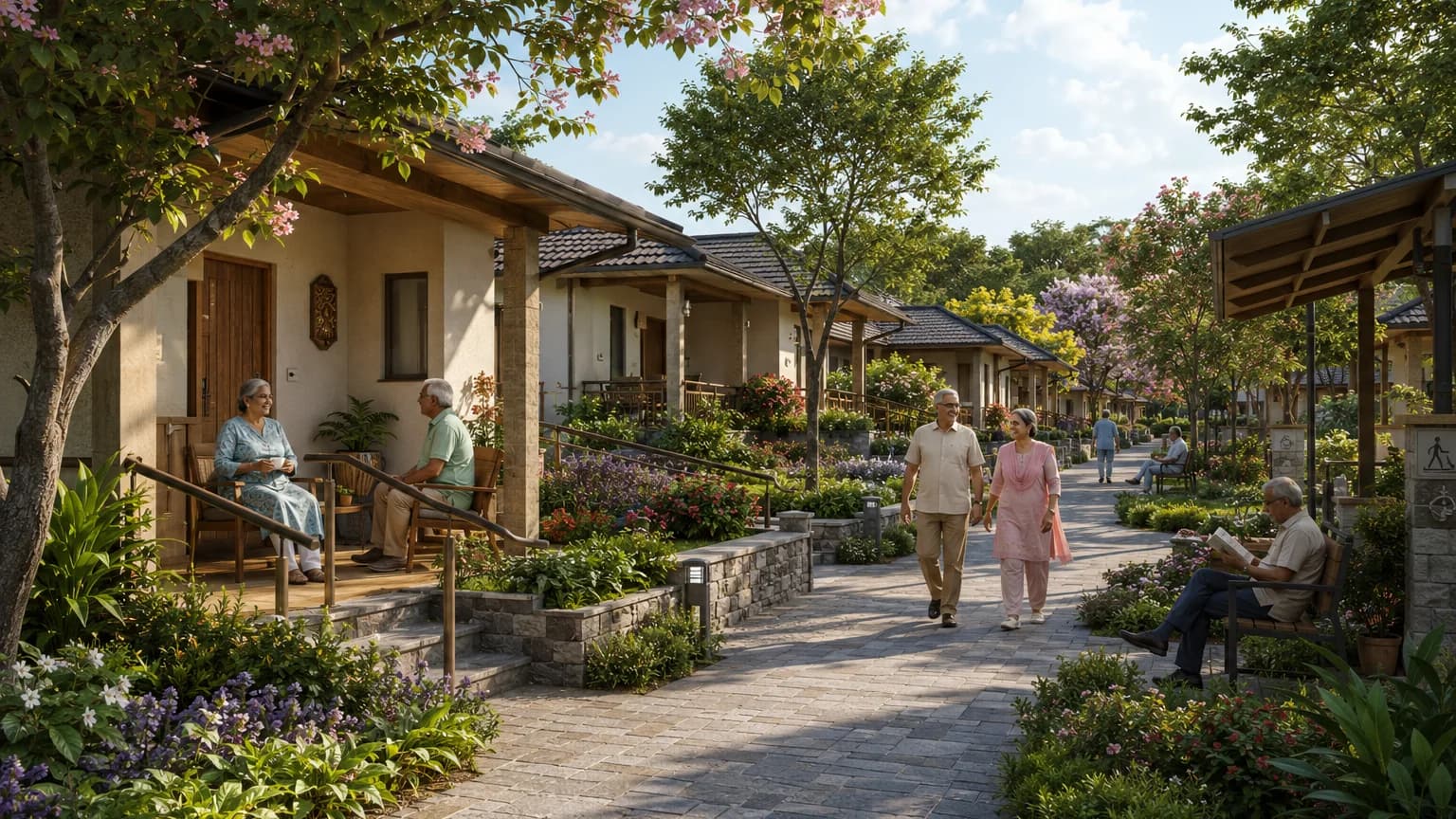
India now has that opportunity. Longer lives, changing households, and rising expectations have opened a window that previous generations did not fully have — not because they lacked wisdom, but because they lacked the knowledge, the time, and the social conditions we have today.
We understand more now about how people age well. Research on healthy ageing, environmental design, social connection, and functional ability has accumulated across decades — from the World Health Organization's Decade of Healthy Ageing to studies on age-friendly communities and the role of place in everyday life. None of this diminishes what came before. It simply allows us to think more deliberately about what later life can be.
The question before us is no longer only how to care for people when they need support. It is how to support flourishing across the full arc of a longer life — before urgency arrives, and long after.
The central question
What if we designed later life differently?
A philosophy of flourishing
Flourishing Is Not an Accident
Later life can be lived with dignity, curiosity, and belonging. But this does not happen by default. It is shaped — quietly, daily — by the environments we inhabit, the relationships we maintain, the purposes we hold, the opportunities we are given, and the independence we are allowed to keep.
Flourishing is not the absence of difficulty. It is the presence of conditions that make a meaningful life possible: the ability to choose, to connect, to contribute, to move, to learn, and to feel that one's days still matter.
A better model, then, is not a list of services. It is a coherent philosophy — a way of thinking about later life that can guide decisions about place, community, and everyday experience.
Once that is clear, a further question follows: if flourishing can be supported intentionally, what would a community need to hold true — every day — for the people who live there?
From idea to institution
This idea gave birth to Ananda Living — a Section 8 not-for-profit institution formed to build communities where later life is supported as a whole, not reduced to care alone.
The organisation exists because the philosophy came first. It is not a property company with a social mission attached. It is an attempt to answer, in institutional form, a question India is only beginning to ask in full: what does it mean to grow older well, here, now, in the society we are becoming?
The framework
The Five Dimensions of Flourishing
These are not marketing pillars. They are interconnected dimensions of a life well lived — each expressed as a question a community must be able to answer honestly, every day.
The dimensions are not a checklist. They reinforce one another. Independence without connection can become isolation. Purpose without wellbeing becomes exhaustion. Learning without belonging rarely lasts. A credible model must hold all five in balance — not optimise one at the expense of the others.
01
Independence
“Can I continue making meaningful choices about my own life?”
02
Connection
“Do I belong to a community where relationships continue to grow?”
03
Purpose
“Is there still something meaningful that only I can contribute?”
04
Wellbeing
“Does my environment support physical, emotional, and mental wellbeing?”
05
Lifelong Growth
“Am I still discovering, learning, and becoming?”
When a community can answer these questions in the affirmative, the next question is practical: through what kind of place, rhythm, and daily life does that balance become real?
The following illustrates the design intent for a future Ananda Living campus. It describes the environment we are building towards rather than facilities available today.
Place and experience
Environment Shapes Experience
Through place, philosophy is designed to become lived experience — not through features displayed on a brochure, but through the daily rhythms a future community would make possible.
Supports Wellbeing
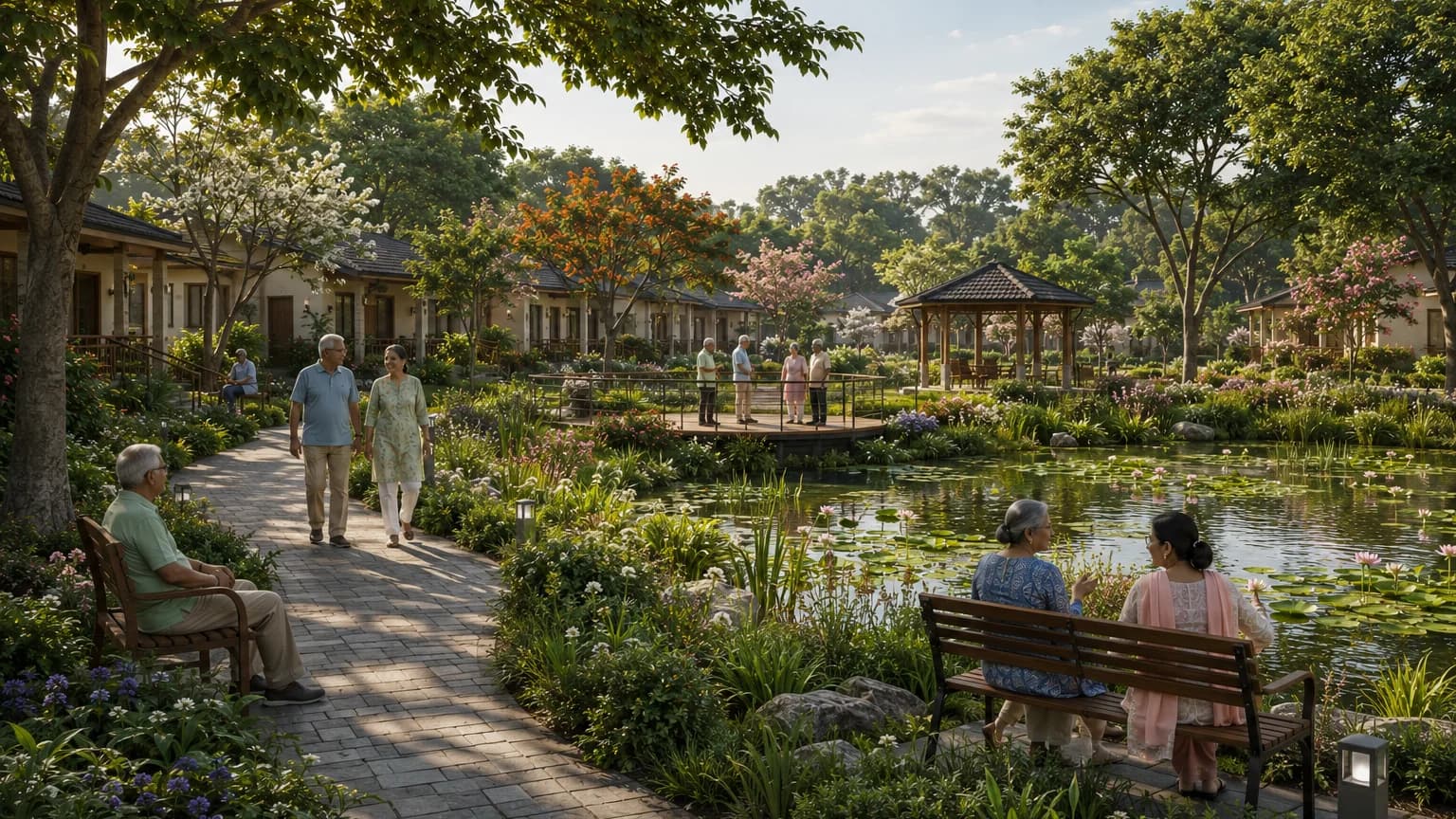
Nature and open space
Contact with nature supports mood, movement, and cognitive ease — especially when it does not require planning a journey. Everyday access to green space is designed to invite the small, repeated acts of walking that sustain physical ability and quiet the mind. This is not landscaping for appearance. It is envisioned as an environmental condition for wellbeing.
Supports Wellbeing
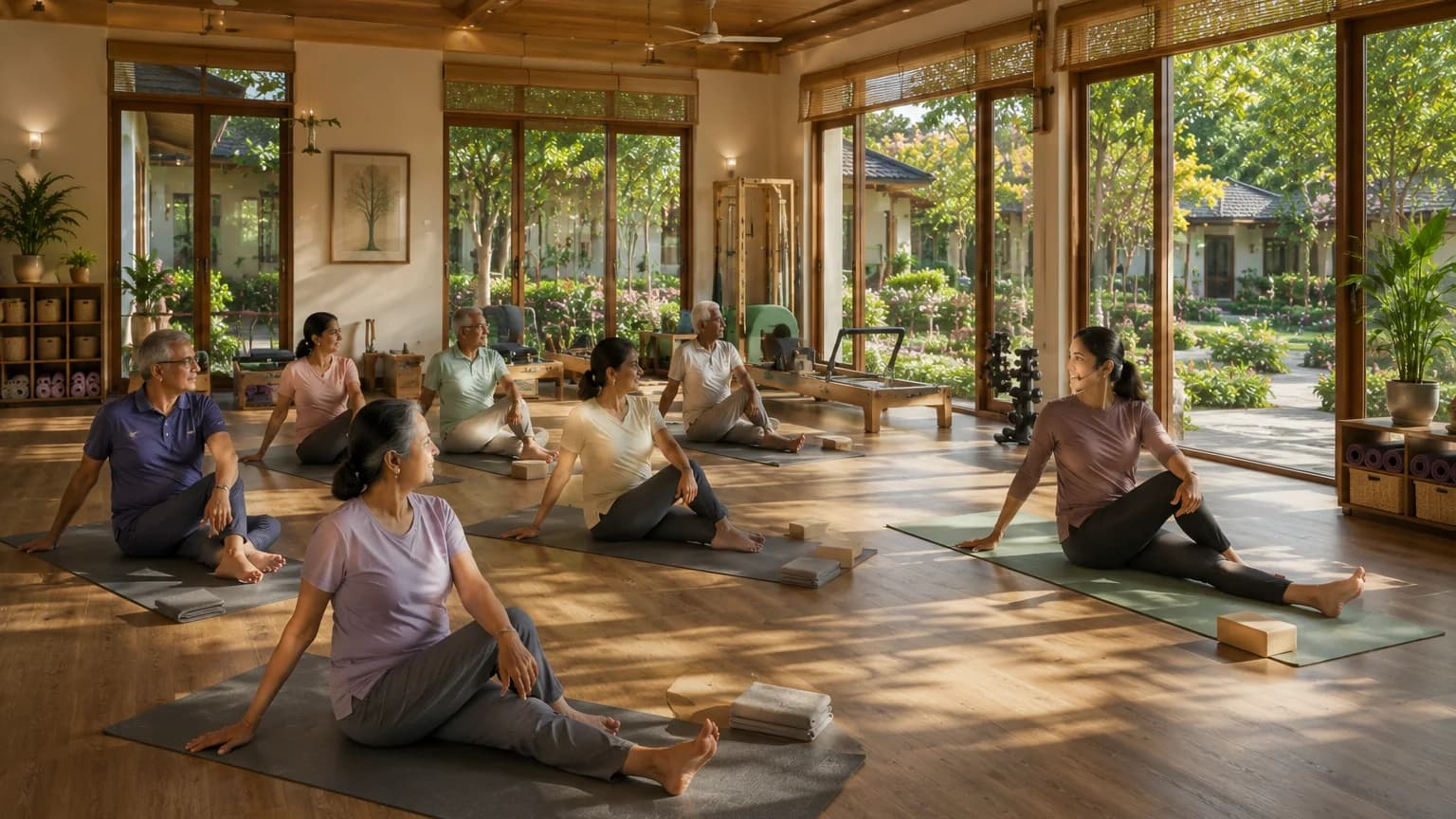
Movement as a daily habit
Functional ability — the capacity to carry out everyday activities — is central to healthy ageing. Spaces designed to invite gentle movement would help people maintain strength and confidence on their own terms. The aim is continuity: remaining capable in the life one chooses, not performing for an audience.
Supports Connection
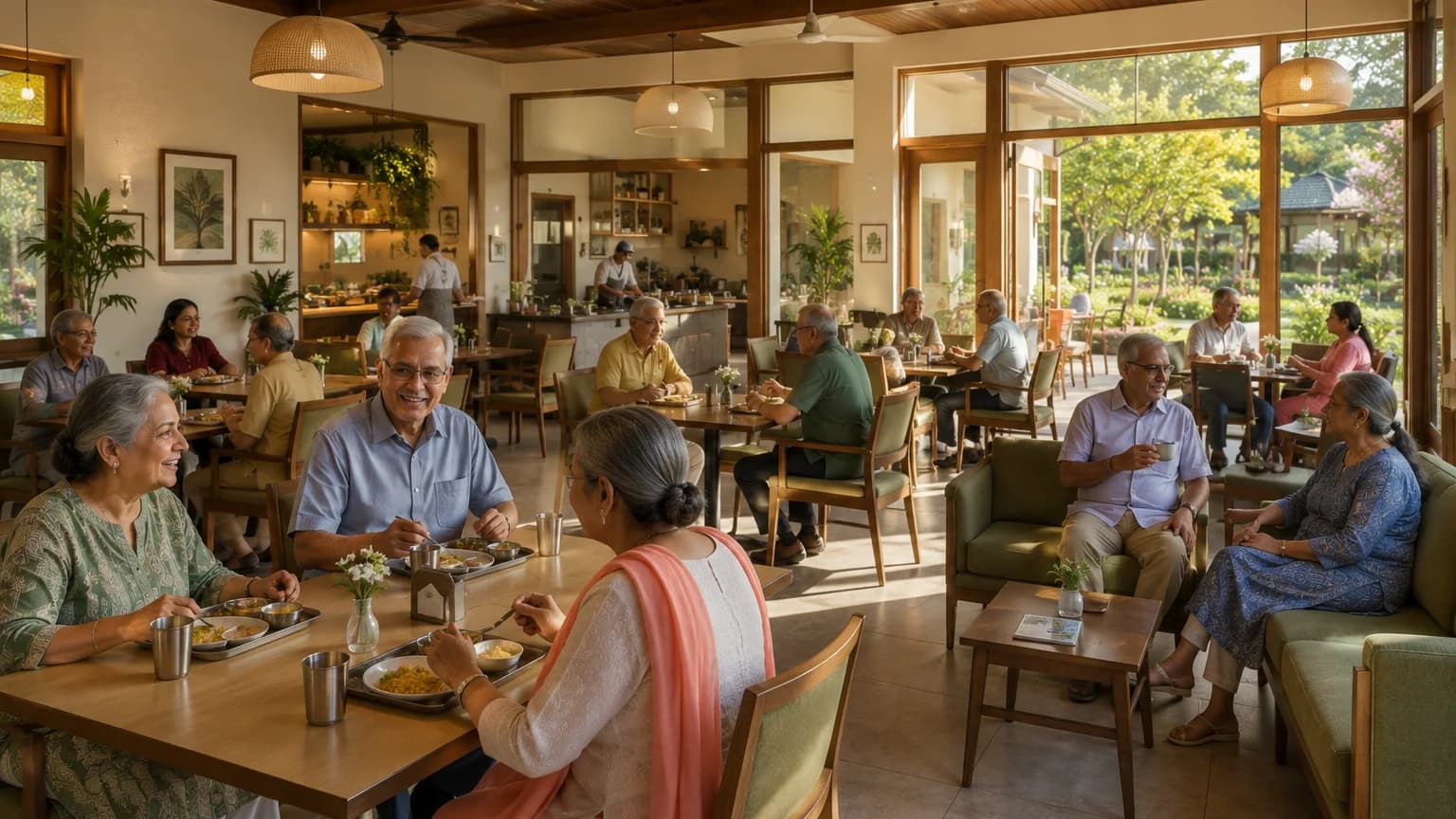
Shared meals and shared tables
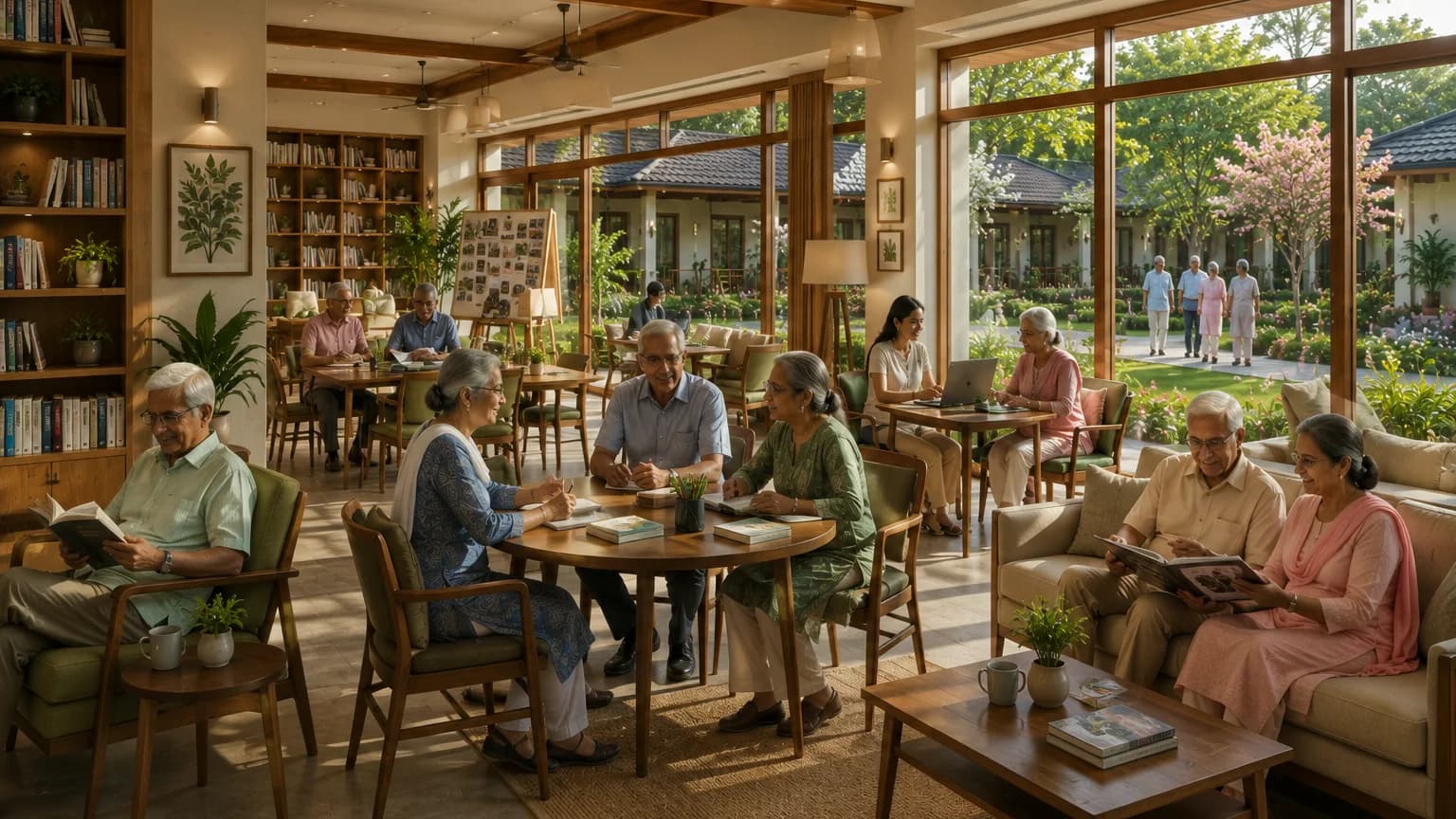
Social connection is not a programme. It is a pattern — repeated encounters over food, conversation, and ordinary ritual. Research on loneliness and social participation shows that belonging is built through frequency and familiarity. A community designed for connection would make room for meals that happen because people choose to sit together.
Supports Lifelong Growth · Purpose
Learning and contribution
Lifelong growth requires permission — and place — to remain curious: to read, to teach, to mentor, to learn what there was never time for before. Purpose often lives in the same rooms — in the skill shared, the story told, the responsibility quietly accepted. Age-friendly communities are designed to treat both as normal at every stage of life.
Supports Independence
Home within community
Independence requires a home that feels like one's own — private, secure, and chosen — while remaining part of something larger. Enough solitude to preserve dignity. Enough proximity to make connection effortless. Neighbourhood-scale design, where daily needs are within comfortable walking distance, is intended to support both without forcing a choice between them.
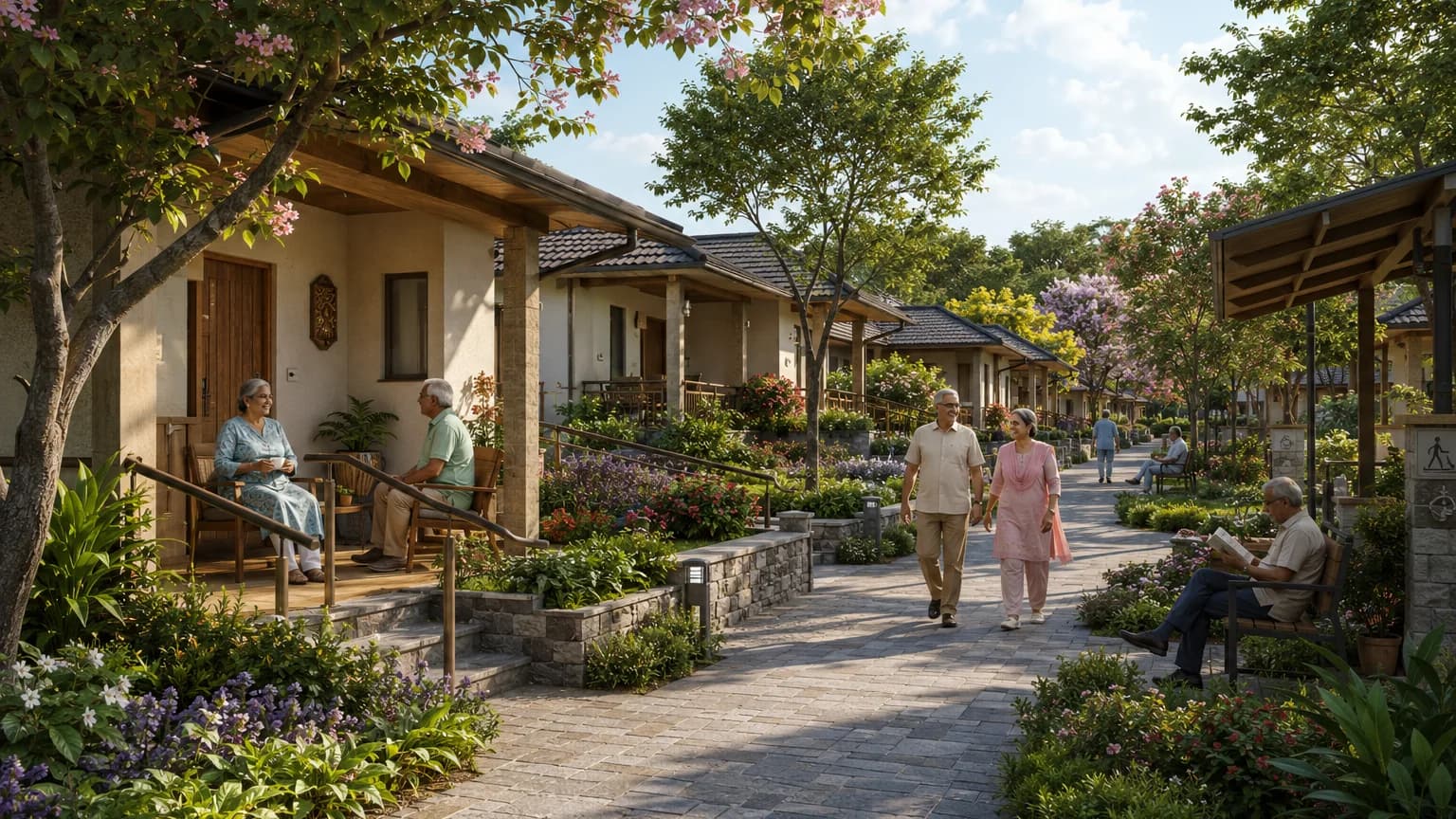
Place is where the framework is designed to become lived experience. What follows is not a catalogue of amenities — it is how philosophy is intended to translate into paths, rooms, gardens, and the distances between them.
Declaration
“Communities do not merely accommodate ageing. They shape the experience of ageing.”
A philosophy matters only if it can be lived every day — in the layout of a neighbourhood, in the rhythm of meals, in the freedom to close one's door and the ease of opening it again.
Whether this particular expression succeeds will be judged over time. What matters now is that the question has been asked clearly — and that the institution attempting an answer is willing to be held to account for it.
Reflection